
The same fragrance can change in perceived intensity and balance from one wearer to another. This guide explains why and offers a practical way to test it.
Skin is not an inert surface
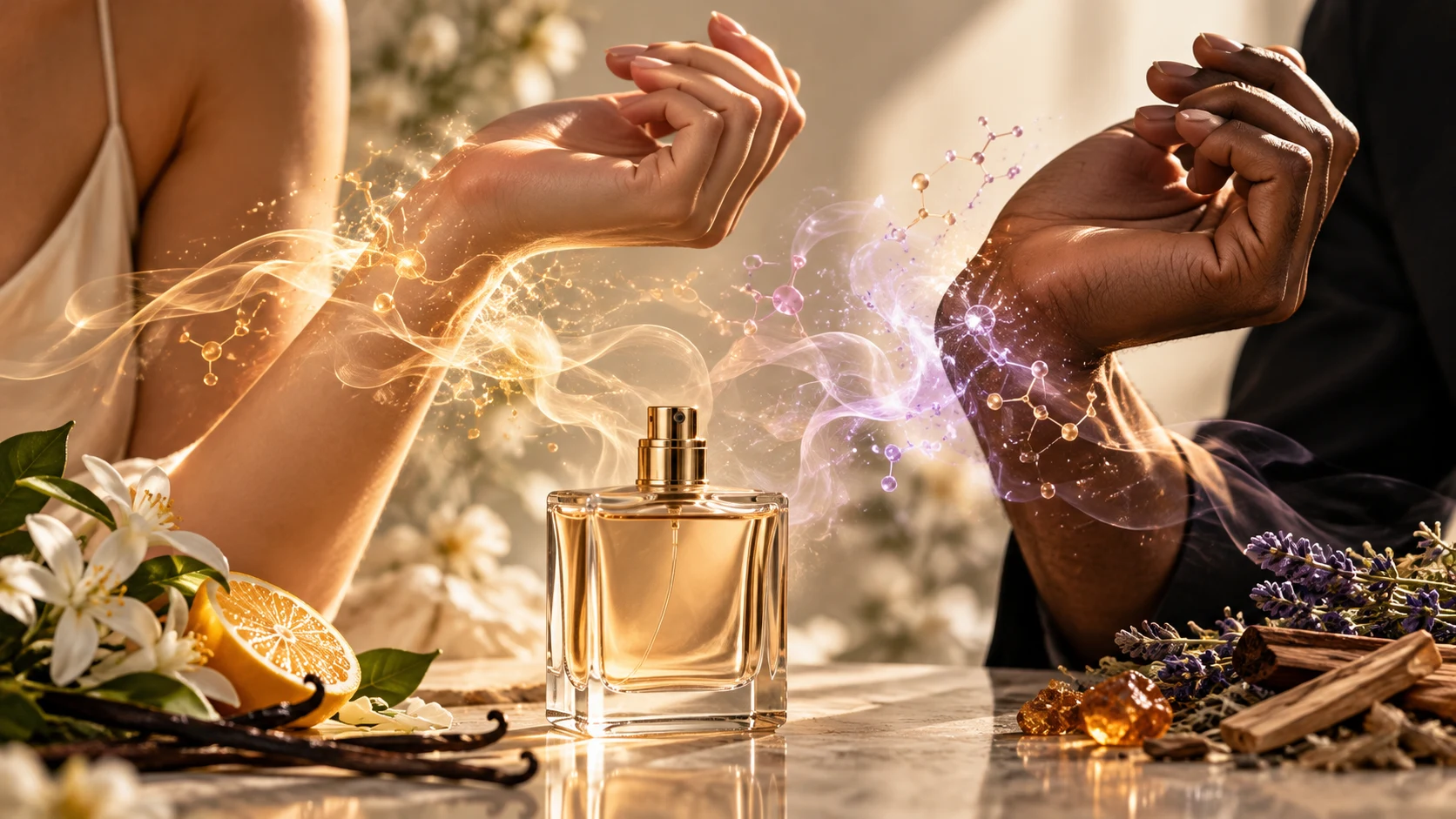
Fragrance molecules evaporate at different rates. Skin temperature, moisture, oils and other products can change their release into the air.
Skin moisture and temperature
Dry skin may make certain accords seem to fade faster, but this is not universal. Heat, exercise and humidity can also affect the experience.
Is it all about skin pH?
No. Attributing every difference to pH is misleading. Surface lipids, hydration, the formulation and individual scent perception all matter.
Olfactory adaptation
You may stop noticing a fragrance you wear regularly while other people still detect it. This does not mean you need to spray more.
A simple comparison test
Apply the same number of sprays under similar conditions. Avoid rubbing wrists together and check the fragrance after 10 minutes, 30 minutes and several hours.
Care and safety
Unscented moisturizer may help dry skin feel more comfortable. Never spray on irritated skin, and stop if a product causes a reaction.
Frequently asked questions
Should I test on skin?
Yes, blotters are useful first but skin testing is better before committing to a bottle.
Does a stronger scent mean a better match?
No. Consider comfort, character and setting as well as intensity.